Sungchul Ji, PhD — The Human RNA Project
Sungchul JiThe Archive
The Human RNA ProjectTheoretical cell biology · 1972 — 2026Rutgers University
Emeritus Professor of Theoretical Cell Biology

Sungchul
Ji

From Atoms to God: A 50-Year Search for the Hidden Architecture of Reality

Department of Pharmacology and Toxicology
Ernest Mario School of Pharmacy, Rutgers University
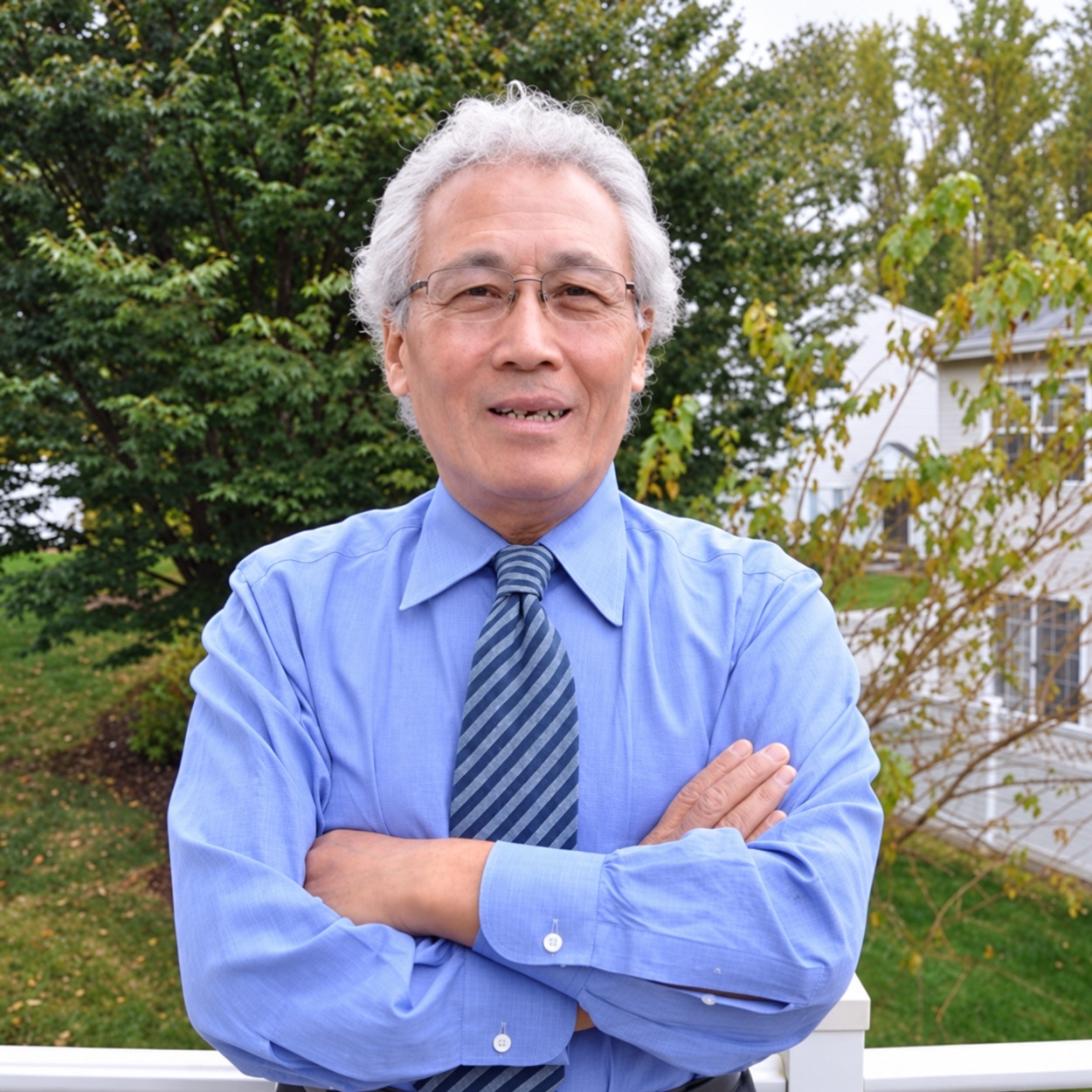
Sungchul Ji, PhD
Sungchul Ji, PhDb. February 17, 1938
2M
Words of his own
235
Works
54
Years of inquiry
1972
The conformon proposed
88
Years young
Preface

Welcome to the Archive

{{ gorCanvas }}
The Geometry of Reality: matter, information and spirit, united in the gnergitondrag to rotate

Explore the profound work of Sungchul Ji, PhD, a pioneering researcher who embarked on a four-decade intellectual journey to uncover the fundamental principles uniting quantum mechanics, molecular biology, and consciousness.

His extensive research, encapsulated in The Human RNA Project, delves into the intricate "Cell Language Theory" and the "Gnergon," proposing a unified framework for understanding life's most complex processes.

This archive serves as a digital repository for Dr. Ji's essays, research papers, and philosophical insights, inviting scholars and curious minds alike to delve into the hidden architecture of reality as seen through his unique lens.

His own work227 works · 271,257 words

Search Sung’s Brain

His essays, patents and books, gathered into a single searchable mind.

{{ brainCanvas }}
Each point a work; signals quicken as you searchdrag to rotate
His own workDocumentsWords
Substack essays 2025 — 2026223261,496
Patents38,413
The Cell Language Theory11,348
Total235271,257
Begin with
{{#if brainAnswer}}
Synthesized from the archive

{{ brainAnswer }}

{{/if}} {{#if brainThemes.length}}
{{/if}}
{{ brainCount }}Source
{{ br.dateLabel }} {{ br.title }}{{ br.sub }} Essay

{{ brainNoneMsg }}

223 essays, 3 patents, 9 books, and 79 research papers - all searchable. His complete intellectual archive. {{#if brainRelated.length}}

Related concepts
{{/if}}

I.The central insight · Proposed 1972

The Conformon

A packet of conformational strain, localized at a sequence-specific site within a biopolymer, carrying both free energy and genetic information.

{{ conformonCanvas }}
Fig. 1 · A localized strain travelling along a coiled protein backboneenergy + information, in one mechanical object
i.

The quanta of life

Where physics counts energy in photons and phonons, Ji proposes that living matter does its work in conformons: discrete, mechanically stored units of free energy that enzymes generate, transfer, and spend.

ii.

Beyond chemiosmosis

Applied to oxidative phosphorylation, the conformon model places the coupling of respiration to ATP synthesis inside protein conformations, extending rather than rejecting Mitchell's proton gradients.

iii.

A 1974 diagram

Paired with the Generalized Franck–Condon Principle, the conformon later becomes the bridge to gnergons, gnergitons, and the saddle-point geometry of action, meaning, and mind.

Read on the conformon
{{ c.title }}{{ c.sub }} {{ c.dateLabel }}
II.Bioenergetics · Oxidative phosphorylation

Beyond the proton gradient

In 1960 Peter Mitchell proposed that mitochondria convert the free energy of NADH oxidation into ATP by way of an osmotic gradient of protons. Ji's conformon model inserts a mechanical step on either side of that gradient.

Chemiosmotic hypothesis
Mitchell, 1960
Chemical energy
NADH
Osmotic energy
H⁺ gradient
Chemical energy
ATP
Conformon model
The Madisonator · Ji
Chemical energy
NADH
Mechanical energy
Conformons
Osmotic energy
H⁺ gradient
Mechanical energy
Conformons
Chemical energy
ATP
Fig. 2 · Energy transformations in oxidative phosphorylation under each model
{{ protonCanvas }}
Intermembrane space · high [H⁺]
Mitochondrial matrix
drag to rotate
Complex I
Pumps protons out of the matrix. Its glow marks the conformational energy driving each transfer.
ATP synthase
Protons return through the c-ring, turning the rotor. ATP leaves the F₁ head.
Dispersal
Free protons drift away from the membrane, the fleeting gradient Ji calls an intracellular dissipative structure.

Fig. 3 · The proton gradient across the inner mitochondrial membrane, schematic

The faults of chemiosmosis
  1. 1No universal theoretical insight into mechanism of action
  2. 2Osmotic gradients not applicable to muscle movement, enzyme catalysis, molecular motors, etc.
  3. 3Fixates on the proton motive force (pmf) as the sole means to an end in ATP production
  4. 4Inefficiency of osmotic coupling
  5. 5Disregards complexity of system

“Harnessing its potential is like expecting perfume to return to its bottle from the air.”

On the proton gradient, which has great thermodynamic impetus to disperse into the cytosol
Conclusions

Chemiosmosis should be reconsidered as a conformon-coupled process. The proton gradient itself is an inefficient coupling modality, a fragile and fleeting intracellular dissipative structure, and may be only one of the contributors to ATP formation. Conformons may play a larger role mechanistically in oxidative phosphorylation, as well as in muscle contraction and molecular motor actions in the cytosol.

After J. Gonzalez, Chemiosmotic Theory: Looking Beyond the Proton Gradient (2017), drawing on Ji, Molecular Theory of the Living Cell, Springer, 2012.

Read on bioenergetics
{{ c.title }}{{ c.sub }} {{ c.dateLabel }}
III.Experimental · Cymascope studies

Music and blood

The effects of popular music on red and white blood cell regeneration in vitro

John Stuart Reid · Sungchul Ji · Maya Bloomberg · Glen Rein
Sonic Age Laboratory · Rutgers University · Sylvester Comprehensive Cancer Center · Quantum-Biology Research Lab
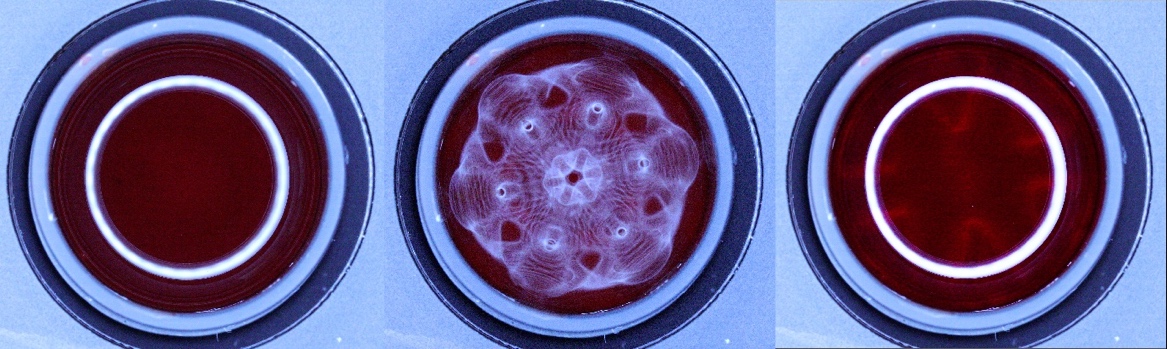
Three cymascope images of whole human blood in a fused-quartz cuvette
Quiescent
Blood at rest, 37.0 °C
44 Hz tone
Hexagonal cymaglyph
Tone removed
Scarlet geometry persists

Fig. 4 · The internal diameter of the fused quartz cuvette is 23 mm, and the volume of blood was 2.3 ml.

An unexpected result

The 44 Hz tone created 6-fold geometry, imprinted onto the blood surface, which was expected, yet a totally unexpected result occurred: anti-nodal elements of the cymaglyph remained imprinted in the blood when the tone was interrupted, slowly dissolving over a period of several minutes.

The authors read the bright scarlet color as increased oxygen binding in the heme pocket, and name the phenomenon the Sound Effect on Hemoglobin Oxygen Affinity (SEHOA). Alongside pH, CO₂, temperature and 2,3-DPG, sound may represent a fifth factor governing hemoglobin's oxygen affinity.

The conformon hypothesis of SEHOA
  1. 1
    Music
    Propagation of musical sound as longitudinal waves
  2. 2
    Conformons in hemoglobin
    Sound generates conformons in the hemoglobin molecule
  3. 3
    Conformons in heme
    Conformons are transferred from hemoglobin to the heme pocket
  4. 4
    Oxygen binding affinity
    Conformon-induced changes of the heme increase its oxygen binding affinity
Red blood cell viability · 20 minutes of immersionControl → after
10 °C · Fridge
Universal Production Music playlist, 85.4 dBA
Control
27.5%
After
50%
Rose to 50%
10 °C · Fridge
40 Hz sinusoidal tone, 85 dBA
Control
12.8%
After
36.8%
Rose to 36.8%
37 °C · Incubator
“City Lights,” 124 BPM, 85.6 dBA
Control
24.45%
After
35.6%
An increase of 11.1%
37 °C · Incubator
“Get Down on the Floor,” 130 BPM
Control
25%
After
31.1%
An increase of 6.1%

White blood cells showed small increases. A 40 Hz sound increased the electrical impedance of a hemoglobin solution by 36%, averaged over three independent runs.
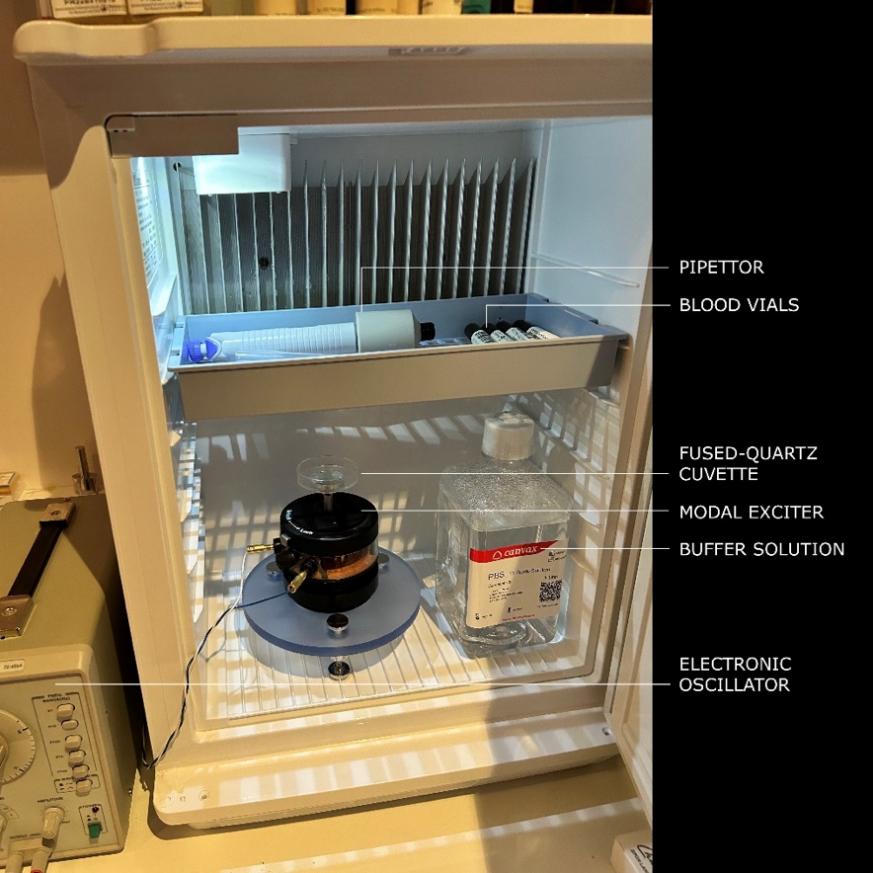
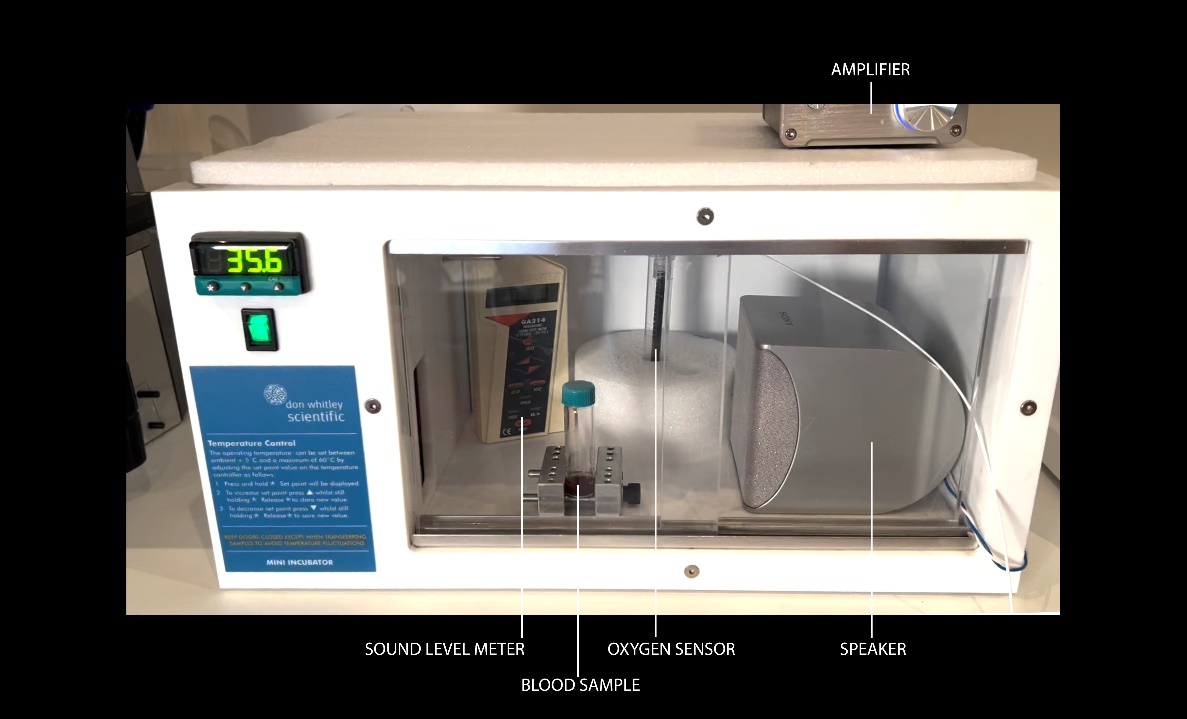
Fridge-based cymascope apparatus at 10 °C
Fig. 5 · Apparatus for the 10 °C experiments
Incubator apparatus for 37 °C experiments
Fig. 6 · Equipment for red and white blood cell experiments at 37 °C
Biocymatics · August 2017CymaScope laboratory
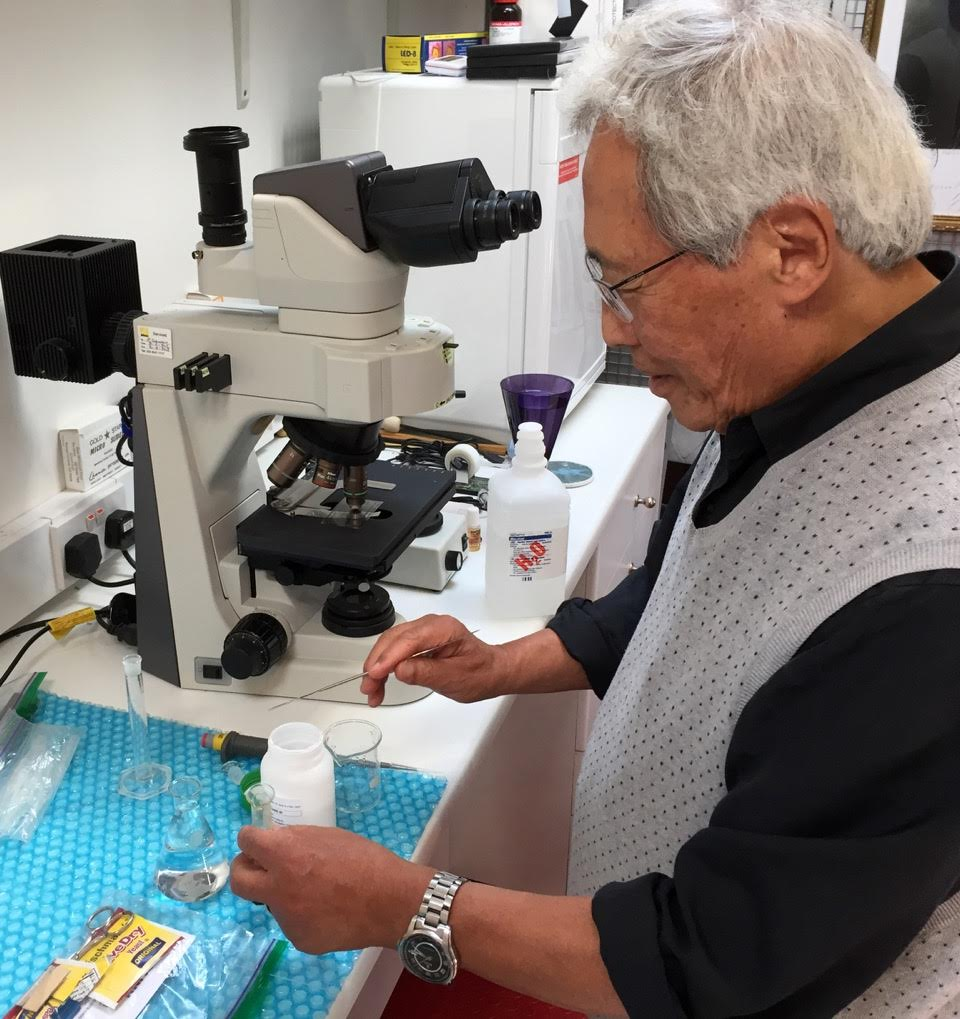
Dr Sungchul Ji preparing yeast samples at the microscope
Dr Ji preparing the yeast-water samples, CymaScope laboratory, 2017

Water as the medium and the message

In August 2017 Dr Ji visited the CymaScope laboratory to test his aquaresonance hypothesis (ARH). Yeast cells suspended in water were introduced into the CymaScope for the first time.

“Water plays a dual role in cell linguistic communication, both as the medium and the message, just as marble can serve as the medium of artistic expression as well as the product of such expression.”

Sungchul Ji, 2017
  1. 1A 1% yeast-water mixture is injected into the quartz cell with an equal volume of 1% glucose.
  2. 2A frenzy of activity for a few seconds, then a beautiful asymmetric pattern.
  3. 3As metabolism proceeds, sudden transitions in the water-wave patterns over several minutes.

Ji proposed the name biocymatics for the study of living cells through their effects on sound-induced water-wave patterns. Read the report

The laboratory series · 2018 — 2019CymaScope laboratory

Testing a 2,500-year-old hypothesis

Inspired by Pythagoras’ belief concerning music and health, John Stuart Reid conceived experiments in early 2015 to test whether music could extend the lifespan of human cells.
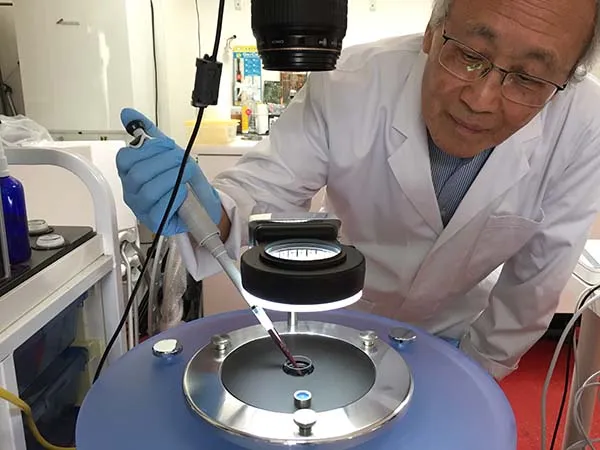
Dr Sungchul Ji pipetting a sample into the CymaScope
Dr Ji introducing a sample into the CymaScope, CymaScope laboratory
  1. 2015Reid conceives the experiments, building on studies linking sonic frequencies to organogenesis and therapeutic ultrasound.
  2. 2017Emily Abbey of Roadmusic.co suggests blood as the source of human cells. Reid reaches out to Sayer Ji, Dr. Ji’s son and founder of GreenMedInfo.com, and the Experiment.com bid for funding launches late in the year.
  3. 2018The bid is met and exceeded. Professor Ji and Reid develop the experimental protocol and conduct the initial experiments.
  4. 2019A second series in May, conducted by Reid with Professor Ji as consultant, tests music across genres and concert pitches.
Sample

Whole blood, type O+, decanted into two vials from one sample.

Music vial

Incubator at 37 °C, immersed in a sound field averaging 85 dBA for 20 minutes.

Control vial

Incubator at 37 °C inside a quiet Faraday cage, 25 dBA, for the same period.

Count

Trypan blue stain and an automatic cell counter separate living cells from dead.

Sound fieldViable red blood cells, music vs. quietRatio
Rap, pop, guitar
7.33–23.4 : 1
Female vocal + backing track
18.1 : 1
Spiritually-oriented chant
17.69 : 1
Dance–techno–house
14.42 : 1
Sound therapy device
11.72 : 1
Male vocal
2.4–10.7 : 1
Orchestral, harp, piano
2.22–7.93 : 1
Gong
5.5 : 1
Female vocal
5.26 : 1
White noise, 85 dBA
4.61 : 1
Vocal musical intervals
4.13 : 1
White noise, 105 dBADestroyed almost all red blood cells within 20 minutes−0.21 : 1

Every music selection produced more viable red blood cells than the quiet control. Tracks with dominant low frequencies scored highest, which the authors relate to the low-frequency pressure of each heartbeat aiding hemoglobin's uptake of oxygen. Music tuned to 432, 440 and 444 Hz showed no significant difference.

Ranges shown in sage, single selections in wheat. Source: J. S. Reid, Testing a 2,500 year-old hypothesis, CymaScope, 2021. Read the lab report

The encouraging results suggest the need for an in vivo study, to establish if full body music immersion leads to increased yields of RBC’s and WBC’s.

The project on Experiment.com
IV.Cosmology · From the Shillongator to the Three-Layered Reality Hypothesis

Reality may require three

The Shillongator model, published in 1991, proposed that the universe is not merely self-organizing but self-knowing. Ji's later cosmology organizes reality into three layers: the visible, a mediating layer, and a deeper invisible source.

{{ geoCanvas }}
Layer I
Tetrahedron
Egypt
The visible pyramid; daily life along the Nile
Symmetry
S4
Reality
Ordinary visible reality
Layer II
Body-centered tetrahedron
Egypt
The Duat, a realm of transition and rebirth
Symmetry
Projection of the 5-cell
Reality
Partially visible, transitional
Layer III
5-cell (hypertetrahedron)
Egypt
The eternal realm; union with Osiris, Ma’at
Symmetry
S5
Reality
Invisible higher-dimensional source

Fig. 7 · Seen along its fourth axis, the 5-cell casts the shadow of a body-centered tetrahedron

Sungchul Ji travelling in Egypt
The explorer, in EgyptSungchul Ji
The pyramid as a shadow

The visible pyramid above ground is only part of a larger structure extending beneath the surface through descending passages and subterranean chambers. Ji reads the whole, visible and hidden together, as a body-centered tetrahedron: one of the three-dimensional projections of the four-dimensional 5-cell.

The Egyptians did not possess four-dimensional geometry. The question Ji poses is whether they intuited the principle, and whether the effort spent preserving the dead follows from it.

“Behind the visible world lies a deeper order—unseen, higher-dimensional, and ultimately more real than the shadow.”

The Egyptian Pyramid as a Shadow of Higher-Dimensional Geometry, 2026
ObservableMediatorDeeper reality
Visible pyramid→Body-centered tetrahedron→5-cell
Quartic equations→Galois theory→Abstract symmetry structures
Matter→Curvature of spacetime→Spacetime geometry
Particles→Wavefunction→Wavicle
Quantum possibilities→GFCP saddle point→Actualized reality
Psychophysical lifeworld→Scientific culture→Fine-grained reality
Reality→Knowledge systems→Self-knowledge
Read on cosmology
{{ c.title }}{{ c.sub }} {{ c.dateLabel }}
V.Mind, peace and the expanded state

The Miamiator

A self-knowing universe has produced both Homo sapiens and artificial intelligence — and now has to choose what kind of knower it becomes. Ji names the two futures the Miamiator and the Mariupolator.

{{ rainbowCanvas }}
Light through water · the spectrum of love

Ji names his models after the cities where they were conceived. The Bhopalator (1985) modeled the living cell; the Shillongator (1991) modeled a universe that evolves from energy to matter to life to mind, and finally to knowledge of itself. The Miamiator — conceived in Miami in 2023 and defined in January 2024 — continues the sequence to the scale of a society.

Bhopalator · 1985
the cell
→
Shillongator · 1991
the universe
→
Miamiator · 2023
the society
Intelligence — natural and artificial
Path I · with love
Miamiator

Intelligence employed to realize love, happiness and emotional health.

Path II · without it
Mariupolator

Intelligence employed mainly for economic or military gain.

Fig. 8 · The fork the Shillongator leaves open

“The society wherein AI is employed to realize Love, Happiness and Emotional Health may be defined as the Miamiator … It is my opinion that our Universe may be destined to evolve to Miamiators rather than to Mariupolators, just as there are more particles in our Universe than anti-particles.”

Sungchul Ji · January 10, 2024
Why it is a research program, not a wish

Natural Intelligence

Tipping the balance toward the Miamiator depends, Ji argues, on a new kind of computing grounded in the Natural Intelligence of living cells — which process information in water and RNA just as machines do in zeros and ones. Reading that language is the work of the Human RNA Project.

“Water is to Natural Intelligence,” Ji writes, “what 0’s and 1’s are to Artificial Intelligence.”

Shillongator
→
Miamiator
A self-knowing universe, learning what to become.
Plant medicine and psychedelics

At the boundary of reality

In the Three-Layered Reality Hypothesis, the middle layer is where altered states of consciousness, archetypal experience, mystical perception and perhaps near-death experiences belong: neither fully physical nor fully transphysical.

Ji asks whether psilocybin reorganizes rather than randomizes neural dynamics, using Planckian information and Shannon entropy as a possible bridge between brain measurements and first-person experience.

VI.Featured essays

Four entry points

{{ f.num }} {{ f.title }}{{ f.desc }} Read
VII.Core research areas

Six lines of inquiry

{{ helixCanvas }}
RNA duplex · A-form
11 base pairs per turn · drag to rotate
{{ r.num }}

{{ r.title }}

{{ r.body }}

VIII.The complete archive

Books & documents

Two published books, a patent, and the foundational papers — the physical record of a 50-year inquiry, from the conformon to the Miamiator.

Sungchul Ji
Molecular Theory of the Living Cell
Concepts, Molecular Mechanisms, and Biomedical Applications
Springer
Molecular Theory of the Living Cell
Springer Science & Business Media · 2012 · 748 pages
The first comprehensive molecular theory of the living cell
THE CELL LANGUAGE THEORY
Connecting Mind and Matter
Sungchul Ji
World Scientific
The Cell Language Theory: Connecting Mind and Matter
World Scientific Publishing · 2018
45 years of research across atomic physics, enzymology, linguistics, and cosmology
MDPI · Information · 2017, 8(1), 24
Waves as the Symmetry Principle Underlying Cosmic, Cell, and Human Languages
Sungchul Ji
Department of Pharmacology and Toxicology, Rutgers University
Received: 17 Nov 2016 · Accepted: 2 Feb 2017 · Published: 20 Feb 2017
doi:10.3390/info8010024
Waves as the Symmetry Principle
Entropy (MDPI) · 2017
The paper uniting sound waves, concentration waves, and quantum waves under one symmetry
Chapter 35 · Academic proceedings
Language as a Model of Biocomplexity
Sungchul Ji, Ph.D.
Department of Pharmacology and Toxicology
Rutgers University
Piscataway, N.J. 08855
1 Introduction
Since human language is one of the most well-characterized complex systems known, the question naturally arises as to whether or not it can model biological complexity […] Results suggest the answer is positive.
Language as a Model of Biocomplexity
Chapter 35 · The foundational paper on cell language as a model for biology
BIOSystems · 2026
Chemiosmotic vs Conformational Models of Oxidative Phosphorylation: Theory and Mechanistic Insights
Sungchul Ji
Emeritus Professor of Theoretical Cell Biology
Ernest Mario School of Pharmacy, Rutgers University
BioSystems · January 2026
ISSN 0303-2647
Chemiosmotic vs Conformational Models
BioSystems · 2026 · 10,136 words
The full-length article comparing Mitchell's chemiosmosis with the conformon model
PROVISIONAL PATENT APPLICATION
RNA QR Code-Based Approach to Drug Discovery and Personalized Cancer Therapy
Inventor: Sungchul Ji
Rutgers University
A system and method for encoding, decoding, and classifying molecular information using RNA QR codes — translating the Cell Language Theory into a practical drug discovery platform.
RNA QR Code Patent
Provisional patent · 2024
Drug discovery and personalized cancer therapy through RNA QR codes

Collected essays

223 essays · 261,496 words · June 2025 — September 2026

{{ countLabel }}Words
{{ e.dateLabel }} {{ e.title }}{{ e.sub }} {{ e.words }}

No essays match this search.

All 223 essays on Substack
IX.Life · The healing path

Regeneration at 88

A pharmaceutical toxicologist recovers through natural medicine after a traumatic gym accident, an ICU stay, and a leg doctors warned he could lose.

The healing path, 2025
Both legs fully healed, the wound closed to a faint scar - no surgery, no amputation
Healed — closed without surgery, amputation, or graft.
Day-by-day photographic record of a severe leg ulcer healing, from Manuka honey through royal jelly
Manuka honey beginsRoyal jelly begins Read the full story
Dr. Ji in the ICU holding his son Sayer Ji's book Regenerate, with fresh vegetables and hummus
Holding his son Sayer Ji’s book Regenerate. Sayer is the founder of Regenerate.
Dr. Ji resting in the ICU, monitors and IV at the bedside
The days doctors warned he could lose the leg
“He was in the ICU with brain swelling and cardiac arrest. He was smiling, eating celery and hummus, and talking about philosophy.”
In the hospital, smiling through it, 2025
In his own words · Food as information
Dr. Ji, on his son Sayer’s philosophy of food
“In the 21st century, food will be regarded as a source of information as well — and more important than energy. We have to emphasize the informational aspect of food, as Sayer Ji has been advocating.”

The theoretical biologist’s own thesis — that life runs on information as much as energy — reflected back through his recovery. He credits the approach to his son Sayer Ji, founder of GreenMedInfo and author of Regenerate.

  1. The accident
    ICU

    A traumatic gym accident landed him in the ICU with brain swelling and cardiac arrest. Severe leg ulcerations related to type 2 diabetes followed, and doctors warned he could lose his leg.

  2. The wound
    Manuka honey, then royal jelly

    Manuka honey stabilized the wound. Royal jelly was then applied, and within weeks the leg was completely healed, without surgery, amputation, or scars.

  3. Sleep
    Traditional Chinese herbal medicine

    A severe, debilitating insomnia resolved within days of the herbal prescription from his acupuncturist.

  4. The heart
    No pacemaker

    He declined a pacemaker after the ICU stay, recovering instead through vitamin C supplementation, consistent physical training, and careful blood sugar management.

  5. Today
    From Max Planck to doing planks

    At 88 years old, he remains remarkably active — planks, pull-ups, squats, pool therapy, and still publishing essays on the Planckian distribution and the geometry of reality.

Father and son

Dr. Ji is the father of Sayer Ji, founder of GreenMedInfo.com and author of Regenerate. His son’s work and book influenced him to adopt the natural health approaches that restored him.

Pool therapy
Pool therapy
Yoga instruction
Daily meal
Daily meals
Swim therapy
From Max Planck to doing planks
Boxing at 88
Balance training
In the pool, smiling
Dr. Ji shopping for healthy food, selecting produce at a store
Shopping healthy
Dr. Ji receiving sound healing therapy on a rooftop terrace
Sound healing

Natural medicine, proven over thousands of years of human experience, should be valued as highly as Western medicine.

Dr. Ji’s closing statement, as summarized by Sayer Ji
Watch his story, in his own words

A personal experience, not medical advice. Always consult with a qualified healthcare professional before making health decisions.

IX.The vocabulary of a 50-year inquiry

A glossary

43 terms, each defined in his own words — extracted from the archive by AI, sourced to the papers and essays where he first used them.

Core Theory

conformon
A conformon is a localized packet of conformational energy, also referred to as mechanical energy, stored in sequence-specific sites within biopolymers. Conformons serve as the immediate source of free energy and information needed to drive orderly motions of biopolymers, and are generated from free energy-releasing processes such as exergonic chemical reactions and ligand binding. They enable biopolymers to generate mechanical forces oriented in a specific direction, facilitating goal-directed motions and modulating chemical reactions.
gnergon
Based on the provided passages, a gnergon can be defined as a discrete carrier of gnergy, which is a hybrid physical entity containing both information (gn-) and energy (-ergy), representing the union of these two aspects as a single entity. Gnergons can be further understood as a complementary hybrid of gnon (information-only) and ergon (energy-only) components.
gnergiton
The gnergiton is a discrete unit of 'Gnergit' defined as the irreducible triad of information (gn-), energy (-erg-), and spirit (-it-) forming an inseparable unit (-on). As the informational component of the gnergon, the gnergiton is a type consisting of many tokens and resides in a multidimensional space encompassing consciousness, self-knowing, and selection. The gnergiton can be understood as a 3D triadic holon, with gnergons being its 2D projections.
cell language theory
The Cell Language Theory posits that cells utilize a molecular language that is isomorphic to human language, meaning they share a common structure and semiotic principles, including double articulation. This isomorphism is evident in the arrangement of gene expression events in space and time, which can be visualized as "cell-linguistic sentences" analogous to verbal sentences in human language. The theory suggests that human and cell languages obey the same set of principles, allowing for a comparative analysis of their information-carrying capacities.
cellese
Based on the provided passages, Cellese refers to the molecular language of cells, which is a self-organizing system of molecules that encode, act as signs for, or trigger gene-directed cell processes. This concept is rooted in the idea that molecules can be considered as signs, and the cellular system as a whole is a self-organizing entity that directs various cellular processes. Cellese can be understood as a language that cells use to communicate and regulate their functions, analogous to human language.
humanese
Humanese refers to the human language, which is isomorphic with cellese, the language of cells. According to Dr. Ji's postulate, humanese and cellese are descendants of a common language called cosmese, postulated to be quantum mechanics. Humanese can be understood as a linguistic system that shares a common ancestry with the language of cells, implying a deep connection between human communication and cellular information processes.
cosmese
The concept of "cosmese" refers to the cosmic language that underlies both cell and human languages, postulated to be the common ancestor of "cellese" (cell language) and "humanese" (human language). Cosmese is characterized as a language involving information transmission in space and time, utilizing quantum wave/particles. It is defined as a spatiotemporally organized system of signs, necessary and sufficient for intra-universe communication, and is comprised of an irreducible triad of moleculese, cellese, and humanese.
RNA QR code
The RNA QR code refers to a molecular encoding system in cells, analogous to human QR codes, which represents mRNA expression profiles as dissipative structures. It is generated from transcriptomic data by analyzing pairwise correlation coefficients of co-expressing RNA transcripts, resulting in a unique arrangement of patterns that can distinguish different cellular states, such as supermetabolon patterns in cancer patients. This encoding system can be used as a biomarker to quantify deviations from a reference state and normalize effects of interventions.
Source: Gmail - RNA QR codes and their applications in biomedical sc

Bioenergetics

oxidative phosphorylation
Oxidative phosphorylation is the culmination of energy-yielding metabolism in aerobic organisms, wherein the energy of oxidation drives the synthesis of ATP. This process represents the final stage of cellular respiration, where all oxidative steps in the degradation of carbohydrates, fats, and amino acids converge. The energy transduction and ATP synthesis in oxidative phosphorylation involve complex mechanistic events, including chemomechanical coupling and electron flow, which have been explained by various models, such as Nath's torsional mechanism and conformational change-based models.
chemiosmosis
Based on the provided passages, chemiosmosis, also known as Mitchell's proton gradient model, refers to the process by which the electrochemical energy of a proton gradient is converted into mechanical energy, driving the synthesis of ATP from ADP and Pi. This concept, proposed by P. Mitchell in 1960, involves the conversion of the proton gradient's potential energy into torque, leading to the rotation of the γ subunit and ultimately resulting in ATP production. The chemiosmotic hypothesis posits that this process occurs through a transmembrane proton gradient.
ATP synthase
Based on the provided passages, ATP synthase refers to an enzyme that catalyzes the production of ATP, present in abundance in intracellular membranes of various organisms, and is responsible for transporting ATP out of mitochondria to be used for various cellular functions. According to Dr. Ji's framework, ATP synthase drives both "passive" and "active" ATP synthesis, with the latter being driven by respiration in mitochondria. The conformon theory of molecular machines also suggests that ATP production by ATP synthase is driven by conformational energy of proteins, or conformons.
proton gradient
The proton gradient refers to the electrochemical energy generated by the uneven distribution of protons across a membrane, which is converted into mechanical energy to drive the synthesis of ATP from ADP and Pi. This energy conversion occurs through the proton gradient-driven mechanism, where the potential energy of the proton gradient is first converted into mechanical energy stored in the F0 subunit, and then transferred to the γ subunit, causing it to rotate. The proton gradient is a key component of Mitchell's chemiosmotic coupling mechanism and the conformon model, playing a crucial role in the production of ATP.
Franck-Condon principle
The Generalized Franck-Condon Principle (GFCP) refers to a universal kinetic principle applicable to various physicochemical processes, including molecular spectroscopy, chemical reactions, and biological processes, which involves the coupling between two processes with significantly different rates. This principle, also known as the Principle of Slow and Fast Processes (PSFP), was postulated by Dr. Ji to extend the traditional Franck-Condon principle beyond electron transfer processes. The GFCP provides a framework for understanding the chemomechanical coupling mechanism in molecular machines, such as kinesin molecular motors.
conformon-coupled process
Based on the provided passages, a conformon-coupled process in oxidative phosphorylation refers to a mechanism where conformons, possibly playing a larger role mechanistically, couple respiration to ATP production, potentially implicating a more enzymologically realistic mechanism than the chemiosmotic model. Conformons may be involved in generating energy supply for communication and prevention of oxidative stress. The conformon model may provide an alternative to the chemiosmotic model in explaining the coupling of oxidation reactions to the generation of transmembrane proton gradients.
Source: CellLanguageTheory-Chapter03.pdf

Planckian & Quantitative

Planckian distribution
The Planckian distribution refers to a statistical pattern that can be described by the Planckian Distribution Equation (PDE), which fits long-tailed asymmetric histograms (LTAH's) found in various natural phenomena. This distribution can be simulated using a linear combination of sine waves based on the Fourier theorem or by transforming the Gaussian distribution non-linearly using a Fibonacci series-based function. The PDE appears to be a fundamental principle underlying the generation of long-tailed histograms in nature, potentially rooted in the principle of wave-particle duality.
Planck-Shannon plot
The Planck-Shannon plot refers to a quantitative method for identifying 'superstructures' in cell biology and consciousness study, as well as discriminating between patterns. It is based on the integration of concepts from Planck's work in physics and Shannon's work in information theory. According to Dr. Ji, the Planck-Shannon plot serves as a novel method to discriminate between different types of patterns or structures.
Planckian information
Based on the provided passages, Planckian information (IP) refers to a measure of order in complex systems, primarily concerned with the amount of information. It appears to be a quantitative concept, distinct from other aspects of information such as meaning, value, and entropy. As a measure of order, Planckian information (IP) may be related to the organization and structure of complex systems, including living systems.
blackbody radiation
Based on the provided passages, blackbody radiation refers to a phenomenon where any heated object emits light whose color and power vary with temperature, and is also associated with a mathematical equation called the Blackbody Radiation-like Equation (BRE) that quantitatively accounts for multiple physical and biomedical processes in nature. Dr. Ji suggests that this concept underlies many biological processes, implying a universal pattern. The BRE equation appears to be a key component in understanding this phenomenon.
wave-particle duality
Based on the provided passages, the concept of "wave-particle duality" in the context of molecular machines, cells, and brains, as described by Dr. Sungchul Ji, refers to the phenomenon where quantum objects, or "quons," exhibit both wave and particle properties. This duality is seen as an organizing principle in biological processes, such as DNA replication, and is related to Planckian distributions in molecular machines, living cells, and brains. Dr. Ji's work suggests that this concept is fundamental to understanding the behavior of complex biological systems.
Boltzmann entropy
Based on the provided passages, Boltzmann entropy refers to the concept formulated by Boltzmann, represented by the equation S = k log W (1872-75), which contrasts with Planckian Information. Dr. Ji's work presents a comparison between these two concepts in Table 8.3A, highlighting their distinct formulations, with Boltzmann entropy being associated with disorder.

Cymaglyphs & Sound

cymaglyph
Cymaglyphs refer to the visible sound patterns that emerge when sound vibrations are imprinted onto a surface, such as pure water, revealing unique patterns of sound energy. These patterns are sensitive to both frequencies and amplitudes at a given frequency, and can exhibit "isomorphism" with natural forms, such as the morphology of organisms. As a concept in the science of cymatics, cymaglyphs represent the visual manifestation of sound's vibrations, allowing for the study of sound's properties and behavior.
Source: Excerpt_165_184_sent_01252017.pdf
cymascope
The CymaScope is a scientific instrument that makes sound visible by utilizing the surface tension of water to translate sinusoidal periodicities in a sound sample into physical sinusoidal structures on the water's surface. This process allows for the visualization of sound waves, with water's high flexibility and fast response to vibrations enabling the capture of even short-lived transients. The CymaScope thereby provides a means to visually represent sound patterns, albeit with current limitations in imprinting higher harmonics.
biocymatics
Based on the provided passages, Biocymatics can be defined as the study of sound patterns and their effects on biological systems, which involves the examination of oscillatory processes, including mechanical, electrical, and biochemical oscillations, and their role in shaping the form and function of living organisms. This field appears to be related to Cymatics, the study of sound vibration visuals, and Sonocytology or 'Cytocymatics', which explores the relationship between sound and cellular processes. Biocymatics may investigate how sound frequencies interact with biological systems to create stable patterns and shapes, influencing the behavior and organization of living cells and tissues.
sound therapy
Based on the provided passages, sound therapy, in the context of blood cell regeneration, refers to a potential new form of sonic-based regenerative therapy that utilizes low-frequency sound and music to catalyze healing and promote the regeneration of red and white blood cells. This modality is grounded in the idea that sound can have tangible biomedical effects, as evidenced by studies demonstrating increased viability of old red blood cells and improved immune support through music immersion. Sound therapy may embody a novel approach to regenerative medicine, potentially changing the treatment paradigm for degenerative and ischemic diseases.
Source: Sound_blood_interactions.docx
Chladni figures
Chladni figures refer to the standing wave patterns of particles that form on a vibrating plate, characterized by the rearrangement of particles, such as sand, into intricate patterns separated by "nodal lines" where the surface is temporarily motionless. These patterns, also known as Chladni patterns, become increasingly complex with higher frequencies and larger amplitudes of input vibrations. They are visualized using devices like Chladni plates, which utilize the vibration of a metal plate to create the standing waves.
Faraday wave
Based on the provided passages, a concise definition of "Faraday wave" is not directly available, as the passages do not explicitly define the concept. However, it can be inferred that Faraday waves are related to pattern formation in oscillated water samples, as mentioned in the reference to Sheldrake and Sheldrake (2017). According to this reference, Faraday wave-patterns are determined in water samples oscillated vertically at a range of frequencies from 50-200 Hz.

Cosmology & Philosophy

Bhopalator
The Bhopalator is a molecular model of the living cell, comprising 20 major steps, including DNA replication, transcription, translation, protein folding, and substrate binding, which collectively function as a transient functional unit to facilitate micro-meso correlations under various environmental conditions. This model is constructed on the basis of physical, chemical, linguistic, and semiotic principles that constitute biocybernetics. The Bhopalator represents a comprehensive molecular-theoretical framework for understanding the living cell, incorporating concepts such as conformons, dissipative structures, and coincidence detectors.
Shillongator
The Shillongator is a model of a self-knowing universe that proposes the universe possesses an intrinsic directionality, evolving through successive stages: Energy → Matter → Life → Mind → Knowledge → Self-Knowledge. This framework conceptualizes the universe as becoming aware of itself through a series of phase transitions, ultimately realizing a self-knowing universe. The Shillongator portrays the universe as a dynamic, self-organizing system, where the culmination of this process is the realization of a universe that knows itself.
Miamiator
The Miamiator refers to a societal state where Artificial Intelligence (AI) is utilized to realize love, leading to happiness and peace. This concept is juxtaposed with the Mariupolator, which represents a state of tragedy resulting from negative human choices based on hate. The Miamiator is associated with positive human choices based on love, facilitated by AI-Human Hybrid Intelligence (AHHI).
Mariupolator
Based on the provided passages, a concise definition of the "Mariupolator" concept is not directly possible as it is not explicitly mentioned in the given texts. However, using the context and framework presented, it can be inferred that a Mariupolator may refer to a societal entity or system where intelligence and information are exploited for economic or military gain, potentially at the expense of democratic values and institutions, aligning with the themes of surveillance capitalism and the manipulation of information ecosystems discussed in the passages.
Source: zuboff-2022-surveillance-capitalism-or-democracy-the-death-m
three-layered reality
Based on the provided passages, the "three-layered reality" (The Three-Layered Reality Hypothesis, TLRH) can be defined as a geometric interpretation of reality consisting of multiple layers, including Layer II (possibly related to civilizations and their instability) and Layer III (associated with symbolic integration), which interact and influence one another. The TLRH framework is self-referential, describing reality while being part of it, and may provide a deeper understanding of human existence and the paradoxes of modern society. The layers in TLRH may be related to the psychophysical lifeworld, reality, and possibly other dimensions of human experience.
complementarity
Based on the provided passages, complementarity refers to a relation between two opposite states or principles that together exhaust the possibilities, characterized by asymmetric bidirectional relations. This concept is exemplified by the principle that certain properties of an object cannot be ascertained simultaneously by a single experimental arrangement, implying a fundamental asymmetry in their relationship. As Dr. Ji's work suggests, complementarity is a universal concept that manifests in various fields, including physics, chemistry, biology, philosophy, and logic.
ABC theory
Based on the provided passages, a concise definition of the "ABC theory" (The ABC theory of complementarity — asymmetric bidirectional complementarity) cannot be directly formulated as the passages do not explicitly mention the "ABC theory". However, the passages discuss various types of complementarity, including B-Complementarity (B-C), KEB-complementarity, and J-complementarity, which may be related to the concept of asymmetric bidirectional complementarity. Further information from Dr. Ji's work would be necessary to provide a precise definition of the "ABC theory".
Tagore
Based on the provided passages, "Tagore" refers to the concept of "human truth" and the idea that our science and universe may be a human activity and a human universe, respectively. Tagore's point, as discussed by Dr. Ji, suggests that the universe may have come into existence at the time of the big bang and is possibly a human construct. Dr. Ji seems to be exploring the complementarity of science and spirituality through the lens of Tagore's ideas, which emphasize the interconnectedness of human thought and the universe.
semiotics
Based on the provided passages, semiotics, specifically Microsemiotics, refers to the study of signs in molecular biology, where molecules acting as stable physical information carriers constitute a fundamental semiotic network, with the genetic code being the prototype for all other signaling systems. This concept is part of a broader framework that describes language and living systems from a unified cybernetic standpoint, encompassing a natural sequel of stages of ever more complex energy levels in a single universal evolution. Microsemiotics is a branch of semiosis that deals with sign processors at the molecular level.
neo-semiotics
Neo-semiotics, as an extension of Peircean semiotics, incorporates the synthesis of scientific knowledge and spiritual wisdom, and includes signs (referred to as 'nilsigns') that represent the unknowable on certain levels yet are experiencable on a personal level. This framework aims to lead to the design of experiments that allow for the observation of different kinds of semiotic signs that complement each other. By integrating Peircean semiotics with spiritual wisdom, neo-semiotics seeks to advance the understanding of cognition and the creation of meaning and knowledge.
Source: Peircean Semiotics_Spirituality_Neurodynamics_Amir_Sung_Josh

Natural Medicine

manuka honey
Manuka honey is an effective antibacterial wound healing agent, particularly against MRSA-colonized leg ulcers, exhibiting antimicrobial and anti-inflammatory properties. It has been studied in various contexts, including in vitro and human studies, demonstrating its potential in treating conditions such as leg ulcers, venous ulcers, and MRSA infections. As a substance, manuka honey is characterized by its pharmacological actions, including antimicrobial and anti-inflammatory effects, with a total of 313 citations (CK) and 103 abstracts (AC) associated with its study.
Source: gmipub_18616_substance_manuka_honey.pdf
royal jelly
Royal jelly refers to a substance that enables the transformation of an ordinary worker bee into a queen, and in a medicinal context, it is a substance that can facilitate wound healing, as evidenced by its ability to completely heal a severe leg ulceration related to type 2 diabetes. This healing process can occur within weeks, resulting in no scars, surgery, or amputation, as seen in the case of Dr. Sungchul Ji's leg. Royal jelly's efficacy is highlighted when used in conjunction with or after other natural remedies, such as manuka honey, have stabilized the wound.
Source: 189680822.royal-jelly-saved-my-fathers-leg.html
acupuncture
Based on the provided passages, acupuncture, also known as Chen-Chiu therapy, is a traditional Chinese medicine approach to healing that has been a pillar of traditional Chinese medicine, but is now transcending its framework and inspiring modern science and medicine. It involves the use of acupuncture needles to relieve pain and produce healing effects, although its acceptance as part of modern medicine is not yet universal. Acupuncture is rooted in a knowledge that goes beyond modern medicine, with a history that is undeniable and irreducible.

Geometry

saddle point
Based on the provided passages, a saddle point in the context of Dr. Sungchul Ji's work can be defined as a critical point in the geometry of action, where life survives and emerges, mediating between what is allowed by physics and what is selected by geometry. The saddle point geometry is embedded in the m-M plane, suggesting a complex, multidimensional space where action and meaning intersect. In this framework, the saddle point represents a transitional state where structured trajectories permitted by systomic irreversibility give rise to consciousness and life.
tetrahedron
Based on the provided passages, a concise definition of the concept "tetrahedron" in Dr. Sungchul Ji's framework is: The tetrahedron refers to a geometric object with 4 apexes connected to a center, specifically the body-centered tetrahedron. This geometric structure may be fundamental to understanding reality, as hinted at by Dr. Ji's mention of higher-dimensional geometry and its potential relation to consciousness and reality. The tetrahedron's significance in Dr. Ji's work appears to be related to its topological properties and potential role in describing the underlying structure of reality.
5-cell
The 5-cell, also known as the 4-simplex or hypertetrahedron, is the simplest regular polytope in four dimensions, defined by five vertices where every pair is mutually equidistant. It is the 4D analogue of the tetrahedron, with all five vertices being perfectly equivalent and no privileged point or center. The 5-cell realizes the symmetry group S₅ and represents the simplest shape in four dimensions, introducing a new dimension of organization with its fifth vertex.
Source: DRAFT_The_Fifth_Vertex.md
gnergiton geometry
Based on the provided passages, the concept of "gnergiton geometry" can be defined as the geometric loci where information, energy, and spirit converge, specifically at the saddle point on a mixed-curvature energy surface, representing the integration of these three aspects. This geometry is associated with the gnergiton, an irreducible unity of information, energy, and spirit, embodying the full triadic unity of reality. The gnergiton geometry can be understood as the ontological geometry (X-Y-Z) that underlies the realization of reality, particularly in conscious systems.
VIII.Scholarly record · Publications & honors

A lifetime in print

112 publications, 2,868 citations, 9,772 reads on ResearchGate. A 45-year scholarly record from the conformon to the Planckian distribution, spanning atomic physics to consciousness studies.

112
Publications
2,868
Citations
2
Books published
1972
The conformon proposed

Books

2012
Molecular Theory of the Living Cell: Concepts, Molecular Mechanisms, and Biomedical Applications
Springer Science & Business Media · 748 pages · The first comprehensive molecular theory of the living cell
Amazon Google Books
2018
The Cell Language Theory: Connecting Mind and Matter
World Scientific Publishing · Results of 45 years of research across atomic physics, single-molecule enzymology, linguistics, semiotics, and cosmology
Academia.edu

Selected Journal Articles & Conference Papers

2026 · Chemiosmotic vs Conformational Models of Oxidative Phosphorylation: Theory and Mechanistic Insights. BioSystems.
2025 · Waves as the Symmetry Principle Underlying Cosmic, Cell, and Human Languages. Entropy (MDPI), 8(1): 24.
2020 · The Planck-Shannon Plot: A Quantitative Method for Identifying Superstructures in Cell Biology and Consciousness Study. Cosmos & History, 16(2): 142–164.
2020 · Discrimination Between Brain Cognitive States Using Shannon Entropy and Skewness Information Measure. Conference paper, with J. J. Davis, F. Schuebeler, R. Kozma.
2020 · The Molecular Linguistics of DNA: Letters, Words, Sentences, Texts, and their Meanings. Chapter.
2020 · Planck-Shannon Classifier: A Novel Method to Discriminate Between Sonified Raman Signals from Cancer and Healthy Cells. With B. J. Park, J. S. Reid. Advances in Intelligent Systems and Computing.
2019 · Fundamental, Quantitative Traits of the "Sociotype". With P. C. Marijuan, R. del Moral, J. Navarro. BioSystems.
2018 · Mathematical (Quantitative) and Cell Linguistic (Qualitative) Evidence for Hypermetabolic Pathways as Potential Drug Targets. Journal of Molecular and Genetic Medicine.
2017 · Waves as the Symmetry Principle Underlying Cosmic, Cell, and Human Languages. Information.
2017 · Protein Folding as a Resonance Phenomenon, with Folding Free Energies Determined by Protein-Hydration Shell Interactions. Biophysical Journal.
2017 · RASER (Rate Amplification based on the Substrate-Enhanced Reaction) Model of Single-Molecule Enzyme Catalysis. Journal of Proteomics & Bioinformatics.
2015 · Wave-Particle Duality in Molecular Machines, Living Cells, and Human Brains. Biophysical Journal.
2014 · Planckian Information (IP): A Measure of the Order in Complex Systems. Conference paper.
2013 · Mechanism-based Clustering of Genome-wide RNA Levels: Roles of Transcription and Transcript-Degradation Rates. With W. Chaovalitwongse, N. Fefferman, J. E. Perez-Ortin.
2004 · Molecular Information Theory: Solving the Mysteries of DNA. Natural Computing Series.
2002 · Microsemiotics of DNA. Semiotica.
2002 · The Bhopalator: An Information/Energy Dual Model of the Living Cell (II). Fundamenta Informaticae.
1997 · Isomorphism Between Cell and Human Languages: Molecular Biological, Bioinformatics and Linguistic Implications. BioSystems, 44: 17–39.

Full publication list available on ResearchGate (112 publications) and Academia.edu (89 papers).

Lectures & Presentations

Vienna · 2014
Planckian Distributions in Molecular Machines, Living Cells, and Brains
Conference paper, full-text available
Stockholm · 2018
Keynote Address
Invited keynote
Rutgers · BABE 2014
Sungchul Ji | Rutgers University
OMICS International Conference
Watch on YouTube
Miami Beach · 2024
Conversation One: Rational and Non-Rational Approaches to AI
Conversations with Joshua · November 2024
Watch on YouTube
Miami Beach · 2024
Conversation Three: Bio-QR Code
Conversations with Joshua · November 2024
Watch on YouTube
CymaScope Lab · 2017
Digital CymaScope: Cancer Cell Sonic Visualization
Featuring the Planckian Distribution Equation
Watch on YouTube

Honors & Awards

—
Mitchell Medal Lecture
Invited lecture on bioenergetics and the conformon model
2008–
Complementarism Honors Seminar
Interdisciplinary honors seminar, Rutgers Honors College · Course page
1982–2015
Professor, Department of Pharmacology and Toxicology
Ernest Mario School of Pharmacy, Rutgers University · Now Emeritus
2024
RNA QR Code Patent Application
Provisional patent: RNA QR Code-Based System for Drug Discovery and Personalized Cancer Therapy
2017
CymaScope Collaboration with John Stuart Reid
Groundbreaking biocymatics experiments · the Aquaresonance Hypothesis · Read the lab report
2025–
The Human RNA Project
223 essays on Substack · 261,496 words · 762 subscribers · Read the essays
About

About Sungchul Ji, PhD

Sungchul Ji, born on February 17, 1938, is a distinguished theoretical biophysicist and philosopher. He embarked on a remarkable 40-year quest to reconcile disparate scientific disciplines, bridging quantum mechanics, molecular biology, and consciousness studies with ancient Vedantic philosophy.

His work centers on understanding life as a complex information-processing system, introducing seminal concepts like the Cell Language Theory, RNA QR Codes, and the Gnergon. Dr. Ji's research challenges conventional paradigms, advocating for a holistic view of reality where fundamental physical laws converge with biological complexity and conscious experience.

He is the father of Sayer Ji, founder of GreenMedInfo.com, whose work and book Regenerate influenced him to adopt the natural health approaches that restored him.

This archive is dedicated to preserving and disseminating his profound contributions, offering a unique perspective on the nature of life, the universe, and consciousness.

LinkedIn Substack conformon.net